

Intumescent and fire protective coatings
Fireproofing and passive fire protection
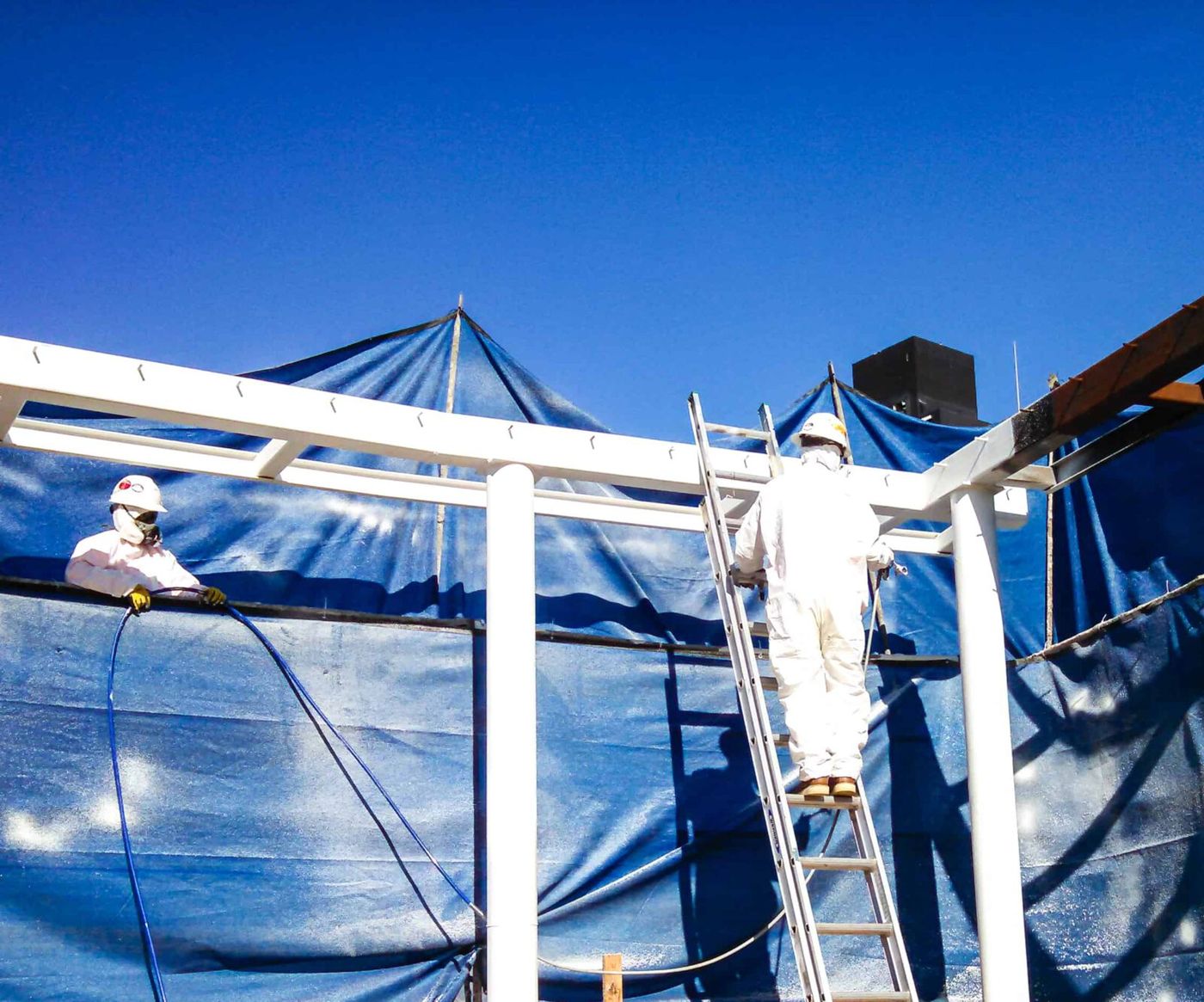
Our fireproofing contractors apply passive fire protection to structural steel, at the rating your code and engineer call for, and measure it as it goes on.
Overview
Passive and active fire protection
Fire protection in a building works two ways. Active fire protection does something when a fire starts: sprinklers, alarms, and extinguishers. Passive fire protection is built into the building and works without anyone switching it on. Fire-rated walls, floors, and doors are passive. So are the fire protective coatings on structural steel, which is our part of the job.
Passive fire protection doesn’t put a fire out. It buys time. Steel doesn’t burn, but it loses strength as it heats up, and at around 550°C (about 1,020°F) it can no longer be counted on to hold the building up. A fire protective coating slows how fast the steel heats, so the structure stands longer, people get out, and firefighters can work.
Where coatings fit
Structural steel is the main place: beams, columns, and the steel above ceilings, behind walls, in elevator shafts, and in parking garages and canopies. On steel that stays visible, a thin-film intumescent coating keeps the look of the steel and takes an approved topcoat in your color. Pipes and conduits can get hard char coatings that keep fire from moving through the utilities.
We apply intumescent fire protective coatings. If another kind of fireproofing fits your project better, we’ll tell you. For how intumescent coatings work and the types we apply, see intumescent fire protective coatings.
The rating comes from the code and the engineer
We don’t pick the fire rating. The building code sets what the structure needs, based on the occupancy type, the height and size of the building, how close it sits to its neighbors, and what’s stored inside. The architect or engineer specifies the rating, from 1 to 3 hours, and the tested, UL-listed system for that rating sets how thick the coating goes on for each size of steel member. Our job is to apply it exactly as specified.
Checked as it goes on
With fireproofing, thickness is everything. Too thin and it won’t reach its rating. Too thick and it can crack. We measure film thickness with gauges as each coat goes on and record the readings, and third-party inspectors verify the work using AWCI Technical Manual 12-B. Prep gets the same care: mill scale, rust, oil, and incompatible primers come off before the manufacturer-approved primer goes on.
Projects
Fireproofing projects
What is passive fire protection?
Fire protection built into the building that works on its own in a fire: fire-rated walls, floors, and doors, and fire protective coatings on structural steel. It doesn’t put the fire out. It slows the heat and keeps the structure standing longer so people can get out.
If we have sprinklers, do we still need fireproofing?
Often, yes. Sprinklers and fireproofing do different jobs, and the building code decides what your structure needs based on its occupancy, height, and size. Your architect or engineer will have the required ratings on the drawings.
Who decides how thick the fireproofing goes on?
The rating and the steel. The code and your engineer set the fire rating, and the tested system for that rating sets the thickness for each size of beam and column. We apply to that thickness and measure it as we go.
How is fireproofing inspected?
We take thickness readings with gauges during application and keep a record of them. A third-party inspector then verifies the thickness and coverage, following AWCI Technical Manual 12-B.
Do you do spray fireproofing?
We spray intumescent fireproofing, the thin-film kind that leaves the steel visible. That’s the only fireproofing we apply. Sprayed cementitious fireproofing is a different product, a thick layer that hides the steel, and we don’t install it.