

Waterproofing and elastomeric coatings
Deck waterproofing
Elastomeric waterproofing for exposed decks, balconies, walkways, and parking decks. A flexible membrane under a slip-resistant topcoat keeps water out of the space below.
Overview
Why exposed decks need a flexible system
A deck takes more than a wall does. Water sits on it, people and cars cross it all day, the sun bakes it, and the slab moves as it heats and cools. A hard coating cracks under that, and once water gets through, it ends up in the rooms, shops, or parking below. Deck waterproofing uses an elastomeric membrane that flexes with the slab and bridges small cracks, with a tough topcoat on top for the traffic.
Decks we waterproof
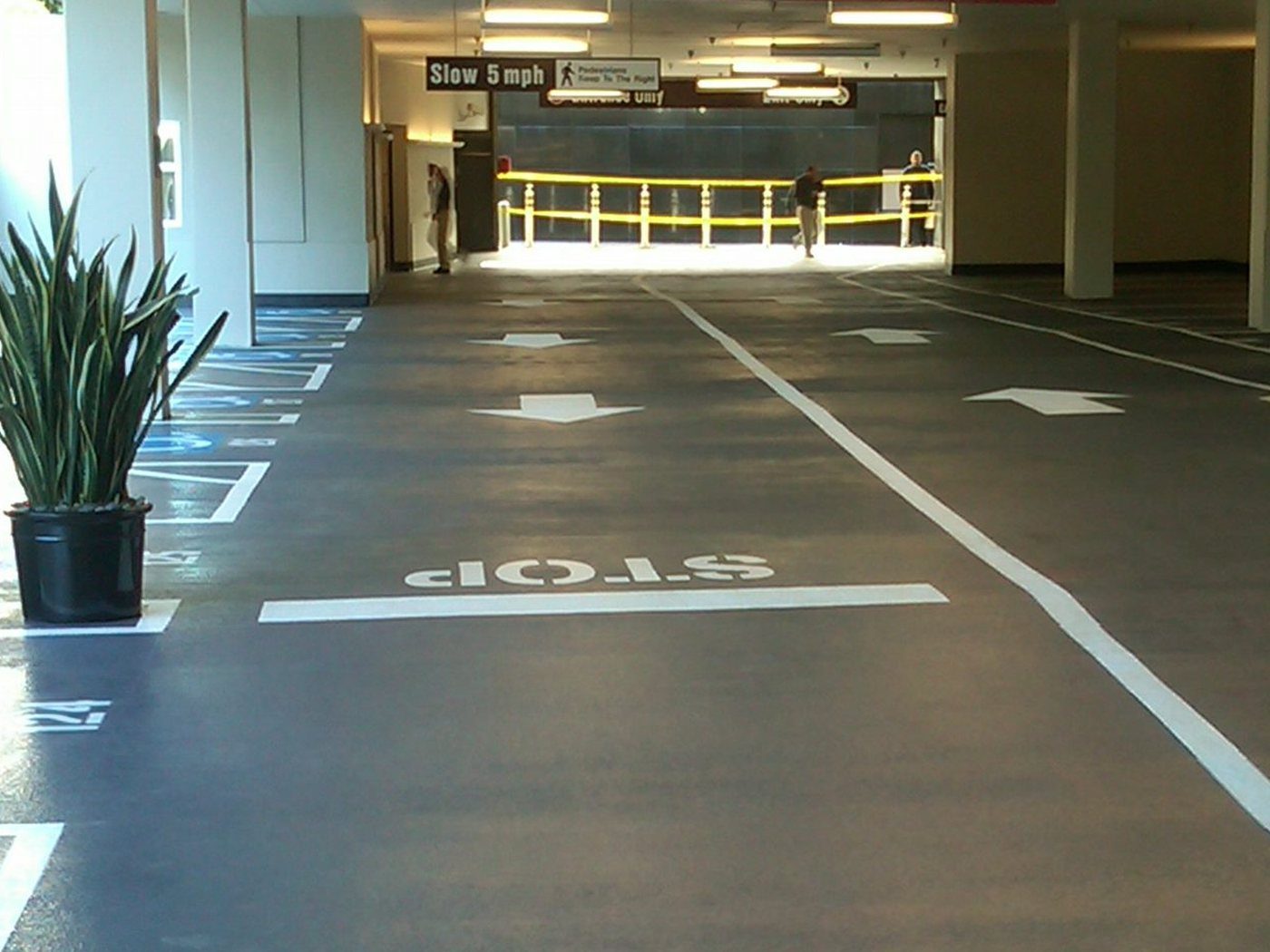
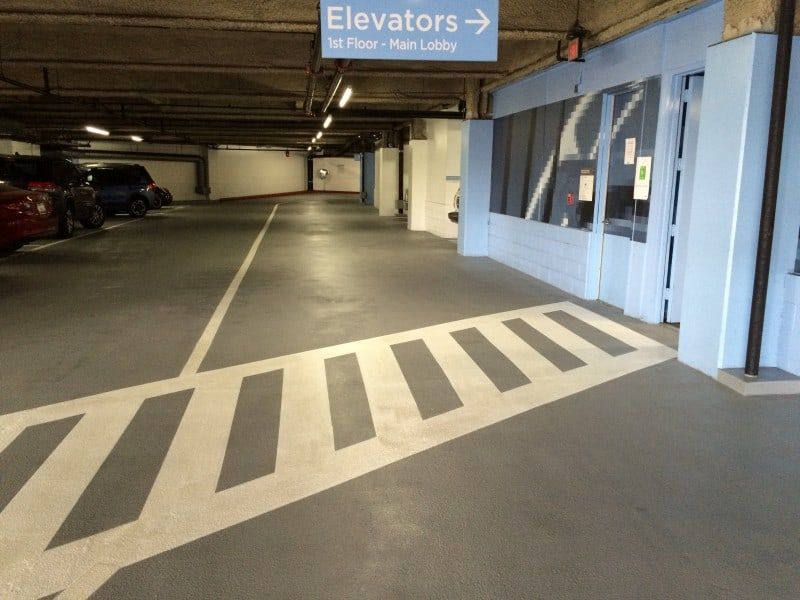
- Parking decks: protection from de-icing salt, vehicle fluids, and thermal movement, with slip resistance for people walking to their cars.
- Balconies and breezeways: at hotels, offices, and apartment communities.
- Pool decks: slip-resistant surfaces that hold up to water, sun, and cleaning chemicals.
- Plaza decks and rooftop terraces: outdoor break areas and plazas over occupied space.
- Walkways and exposed platforms: the routes people use every day, in any weather.
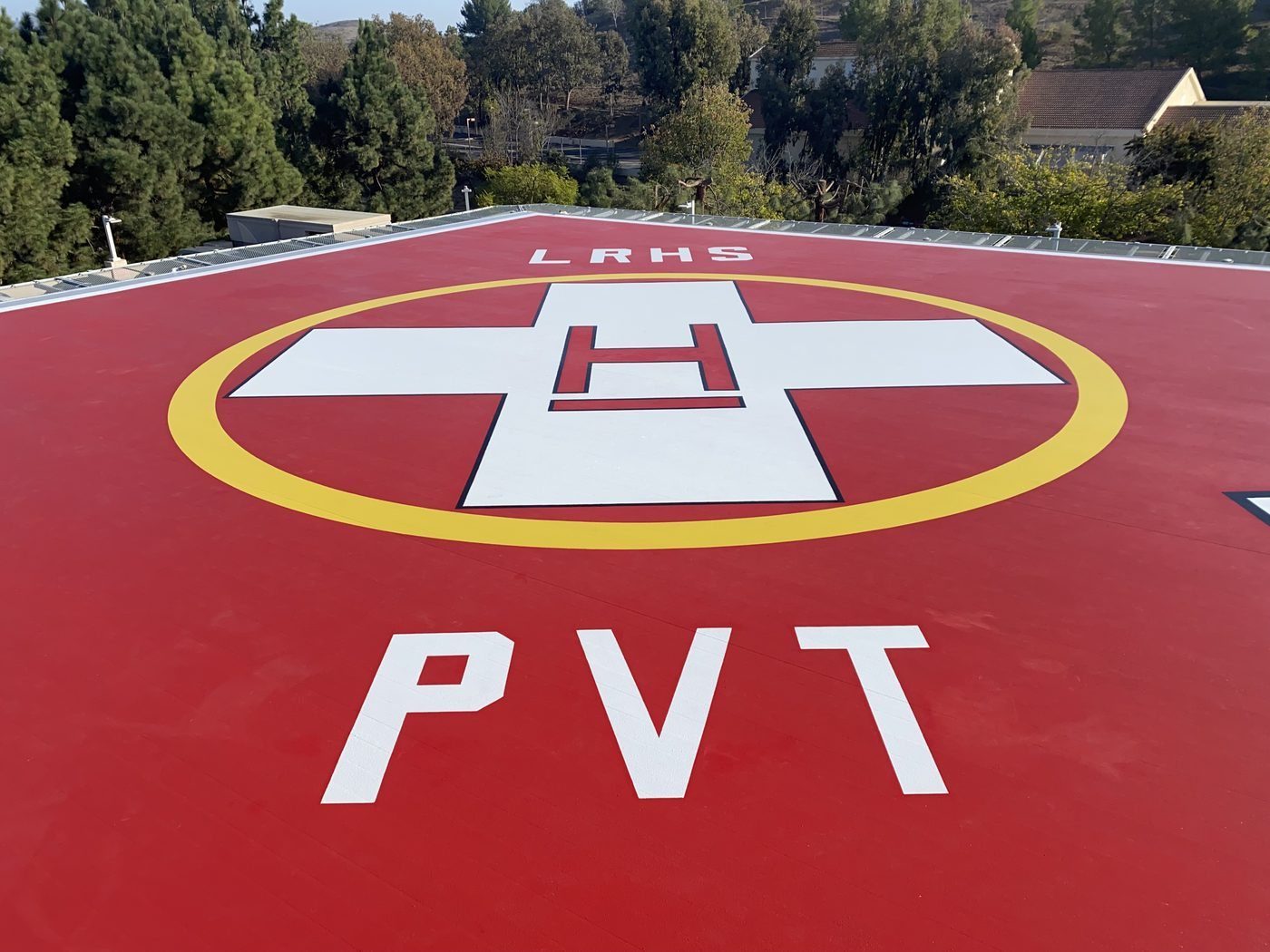
- Helipads: rooftop deck coating with new markings.
How the system goes down
The deck is prepped to take off old coatings, dirt, and contaminants and give the new system a profile to grip. A primer bonds the system to the slab. The elastomeric membrane goes on next and bridges minor cracks. The topcoat goes on last, chosen for what the deck needs: slip resistance, UV stability, chemical resistance, or color. Then the lines, stalls, and markings go back down.
Elastomeric or epoxy?
Elastomeric deck coatings and epoxy floors do different jobs. Epoxy is hard and rigid, which is right for interior floors and many covered garage levels. An exposed deck moves and holds water, so it needs a coating that flexes with it. If you’re not sure which one you have, or need, we’ll tell you at the site visit.
Keeping the deck open
Most decks can’t close for long. We work in phases, at night and on weekends, and use fast-curing systems where the schedule is tight, so part of the garage or walkway stays open.
Projects
Deck waterproofing projects
Waterproofing and elastomeric coatings
More waterproofing and elastomeric coatings
What’s the best waterproof deck coating for a commercial deck?
For an exposed concrete deck, an elastomeric system: a primer, a flexible membrane that bridges cracks, and a traffic-grade topcoat. The topcoat is picked for how the deck is used, with more texture where it gets wet and chemical resistance in garages.
Will the deck be slippery?
No. The topcoat can be textured or slip rated, with more grip on ramps, pool decks, and anywhere that gets wet.
How long is the deck closed?
It depends on the system, the weather, and the size of the deck. We use fast-curing systems and phase the work so part of the deck stays open, and the estimate gives you the return-to-service times.
Do you waterproof home decks?
No. We only do commercial and industrial work, so we don’t coat decks on houses. Balconies and walkways at apartment communities and HOAs, yes.