

Waterproofing and elastomeric coatings
Elastomeric coatings
A thick, flexible elastomeric coating that keeps water out of stucco, masonry, and concrete walls. It stretches with the building and bridges hairline cracks.
Overview
What an elastomeric coating does
Most exterior walls let water in long before they look bad. Hairline cracks open and close with every hot day and cold night, and ordinary paint cracks right along with them. An elastomeric coating goes on much thicker than paint and cures to a rubbery film that stretches over those cracks and pulls back without splitting. Water stays out, and moisture already in the wall can still escape without the coating letting go.
It’s one of the most common coatings on commercial and industrial buildings, and the one we reach for when a wall is taking on water.
Where elastomeric goes
- Stucco: the most common use. Elastomeric covers the fine cracks stucco is known for.
- Concrete and tilt-up walls: poured and precast concrete that has started to crack and stain.
- Masonry and block: brick and concrete block that soak up water through pores and joints.
- Patches and repairs: elastomeric stripe coats over patched and sealed cracks, so water can’t get in behind the finish.
Roofs and decks get their own elastomeric systems, built for standing water and foot traffic. See roof coatings and deck waterproofing.
Elastomeric or regular exterior paint?
A good 100 percent acrylic paint is the right finish for a sound wall. Elastomeric is the better choice when the wall has hairline cracks, takes hard sun or driving rain, or has started to leak.
It has limits. Elastomeric bridges hairline cracks, not structural ones. Cracks up to about a quarter inch get an elastomeric sealant first, the limit most manufacturers set. Anything wider, or a crack that keeps moving, gets repaired or injected before any coating goes on.
What makes it last
Elastomeric only works if it bonds and goes on thick enough. We power wash, take off loose paint, seal and patch the cracks, and prime before two full coats go on. We pick the product for the wall and the climate, looking at weather exposure, hardness, abrasion resistance, and tear strength, and we apply it in the temperatures the product allows.
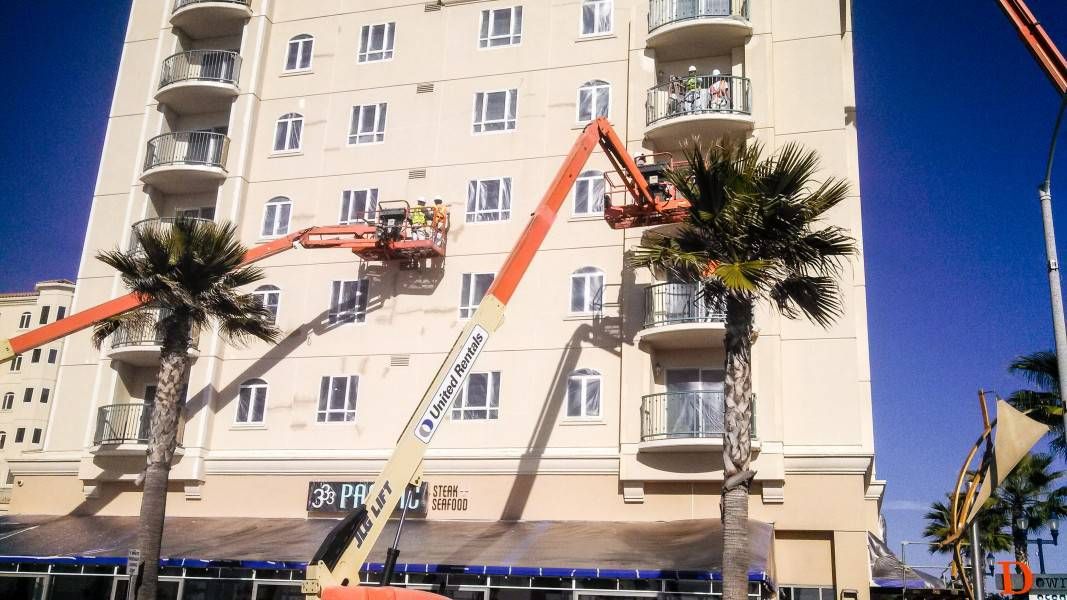
At Wilshire Comstock, twin 22-story towers, our crews worked from swing stages and did extensive surface prep before the elastomeric went on. The coating held up from 1999 until the owners called us back in 2011.
Projects
Elastomeric coating projects


Waterproofing and elastomeric coatings
More waterproofing and elastomeric coatings
What is elastomeric paint used for?
Exterior walls that need to keep water out: stucco, concrete, tilt-up, masonry, and block. It’s thicker and more flexible than regular paint, so it covers hairline cracks and moves with the wall instead of cracking. Elastomeric paint and elastomeric coating mean the same thing.
Elastomeric or acrylic: which is better for a commercial building?
Acrylic for a wall in good shape that mainly needs color. Elastomeric for a wall with hairline cracks, water getting in, or hard weather exposure. Regular acrylic resists water. Elastomeric forms a waterproof film. We’ll tell you which one your walls need at the site visit.
Can elastomeric go over the existing paint?
Usually, yes, if the old paint is still well bonded. Loose and peeling paint comes off, the wall is cleaned, and a primer that bonds to the old finish goes on first. Chalky or failing coatings need more prep, and the estimate spells it out.
Is polyurea an elastomeric coating?
Yes. Polyurea is a fast-curing elastomeric that handles low temperatures and resists acids. It also needs heated, high-pressure spray equipment and trained applicators, and some formulas discolor and chalk in sunlight, so it isn’t the usual choice for a building’s walls.
Do you coat houses?
No. We only do commercial and industrial buildings, including apartment communities and HOAs.