

Concrete deck and floor coatings
Industrial floor coatings
Industrial epoxy floor coating and urethane systems for plants, warehouses, and process areas, chosen area by area for what each part of the floor needs to support.
Overview
One plant, several floors
An industrial floor is rarely just one floor. The forklift aisle, the wash-down room, the loading dock, and the machine pit each wear out for different reasons, so one product across the whole plant usually means some areas fail early. We walk the plant with you and pick a system for each area.
Forklifts and heavy loads
Aisles, docks, and production floors take wheel traffic, dropped parts, and dragged pallets. A high-build industrial epoxy floor coating gives them a thick, hard layer that resists impact and abrasion, often with a urethane topcoat for extra wear. Aisle striping goes down at the end of the job.
Chemicals, oil, and grease
Process areas, maintenance shops, and pits see oils, solvents, and cleaning chemicals. Those get a chemical resistant system chosen for what’s actually spilled. At Weber Metals, home of a 12,000-ton press, we coated the grease pit with an epoxy that withstands temperatures up to 1,000 degrees Fahrenheit, inside very short application windows.
Heat, cold, and washdowns
Hot washdowns, steam, and cold storage put a floor through fast temperature swings. Rigid coatings can crack under that thermal shock, so these areas usually get a urethane system, which flexes more, with anti-skid texture. Food areas also get a cove base.
Static-sensitive production
Electronics and solar production lines need ESD flooring that drains static to ground, like the floor we installed at Reel Solar.
Working around production
We coat in sections, between shifts, on nights and weekends, or inside a planned shutdown, so the plant keeps running. If you’re pouring a new slab for an expansion, plan on about 28 days of curing before it’s coated, and we moisture test it first.
Projects
Industrial floor projects
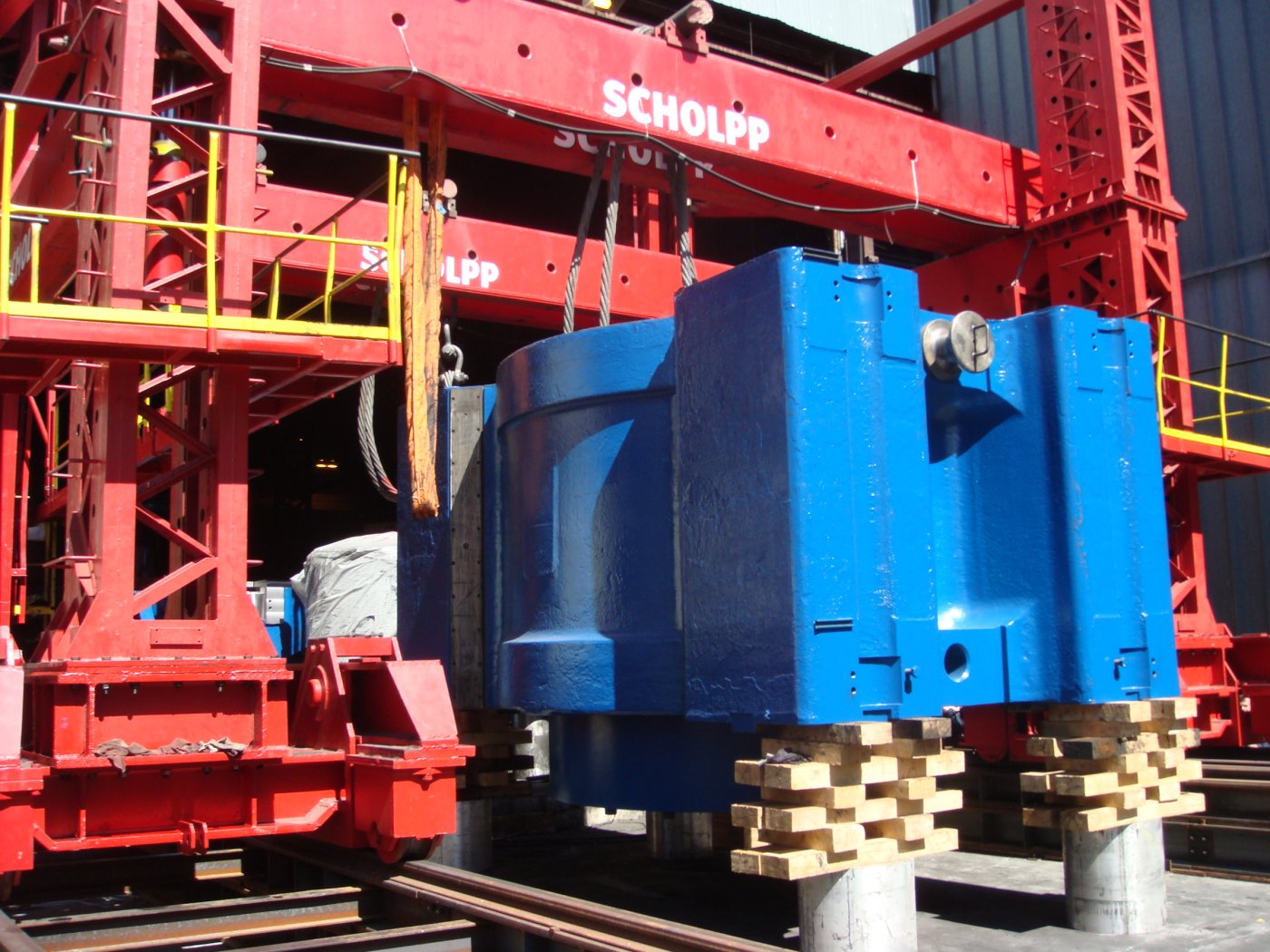 Heavy machinery coatingsWeber MetalsWeber Metals is the home of a 12,000-ton press that only one team in the world is…
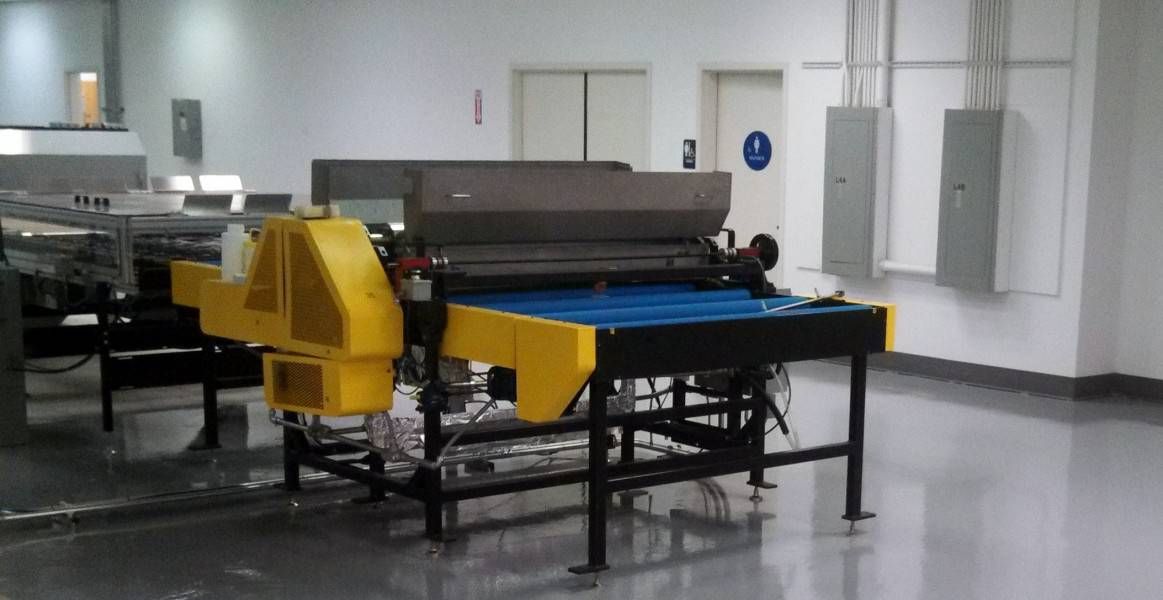 Epoxy floor coatingReel SolarFirst we prepped the floor by cleaning with detergent or an acid wash as needed.
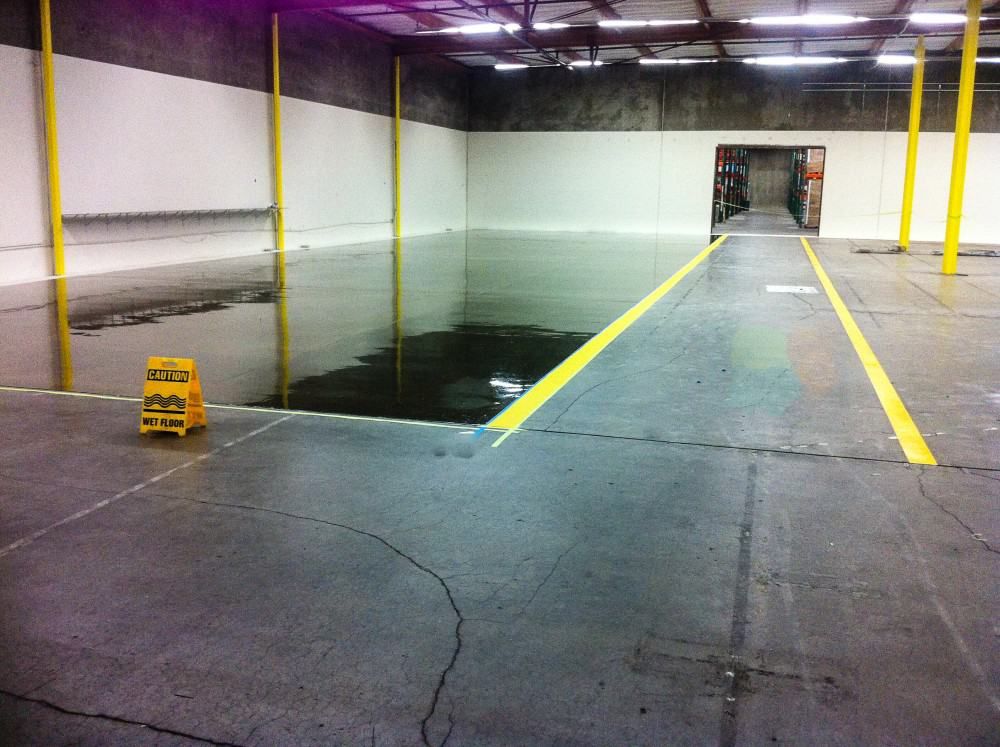 Epoxy floor coatingLabeltechRaider has worked with Labeltech on multiple epoxy deck coatings projects.
Concrete deck and floor coatings
More concrete deck and floor coatings
- Epoxy and fast cure floor coatings Hard, seamless epoxy floors, with fast-dry systems for tight schedules.
- Elastomeric floor coatings Elastomeric waterproofing for decks, balconies, walkways, and parking decks.
- Chemical resistant floor coatings For acids, oils, and solvents in food plants, labs, and mechanical rooms.
- Color coding, safety striping and directional markings Safety lines, aisle markings, and color-coded zones.
- Broadcast, anti-skid and traffic coatings Slip-resistant texture for wet floors, ramps, and parking decks.
- Anti-static and ESD floor coatings Controls static discharge around sensitive equipment.
- Polished and stained concrete Polished and stained concrete for lobbies, showrooms, and malls.
- Polyurethane and UV protective floor coatings Clear finishes and UV topcoats that keep floors and decks from fading.
What’s the best floor coating for a warehouse?
For most aisles and storage areas, a high-build epoxy, often with a urethane topcoat. Areas with chemicals, heat, or washdowns need something different, so we look at each area before we recommend a system.
How soon can a new concrete slab be coated?
Plan on about 28 days. New concrete holds water while it cures, and coating it too soon leads to blistering and early wear. We moisture test the slab before we coat it.
Can you coat the floor during a plant shutdown?
Yes. Tell us the window and we plan the prep, coating, and cure to fit it, or we phase the work over several shutdowns or weekends.
Do you also coat the steel and equipment in the plant?
Yes. Our crews also do structural steel, machinery, and tank coatings, so one contractor can handle the floor and what stands on it.