

Concrete deck and floor coatings
Anti-static and ESD flooring
ESD flooring that drains static to ground before it reaches your electronics. For production floors, labs, data centers, and hospitals.
Overview
Why static is a floor problem
People build up static just by walking, and dry air makes it worse. Touch a circuit board or a piece of sensitive equipment, and the charge jumps. That’s electrostatic discharge, or ESD. It matters more every year as computers and automation take on bigger roles in your operation. Most of it is too small to feel. But it can damage electronics, and that costs time and money.
An ESD floor coating gives that charge somewhere to go. The coating is tied to ground, so static drains off people and carts as they move across the floor, instead of building up.
Conductive or static dissipative
ESD flooring comes in two main types. Conductive floors carry charge to ground the fastest. Static dissipative floors drain it more slowly and in a controlled way, and they’re common in electronics assembly and labs. The right one depends on what you’re protecting and the spec your equipment maker or quality team works to.
How we install it
An ESD floor only works if the coating is well bonded and continuous, so prep matters. We clean the slab, patch pits and cracks, and caulk or coat the expansion joints. Then the grounding component goes in, followed by the epoxy coats. That’s how we did the floor at Reel Solar.
The finished floor is non-porous, so spills wipe up instead of soaking in, and it handles foot traffic and machinery like any other epoxy floor.
Picking the right system
Static control is only one job the floor has to do. We weigh how much charge your space builds up against the rest: forklift and cart traffic, cleaning, and in labs and hospitals, hygiene. Then we recommend a system, from the coating manufacturers we work with, that covers all of it.
Projects
Floor coating projects
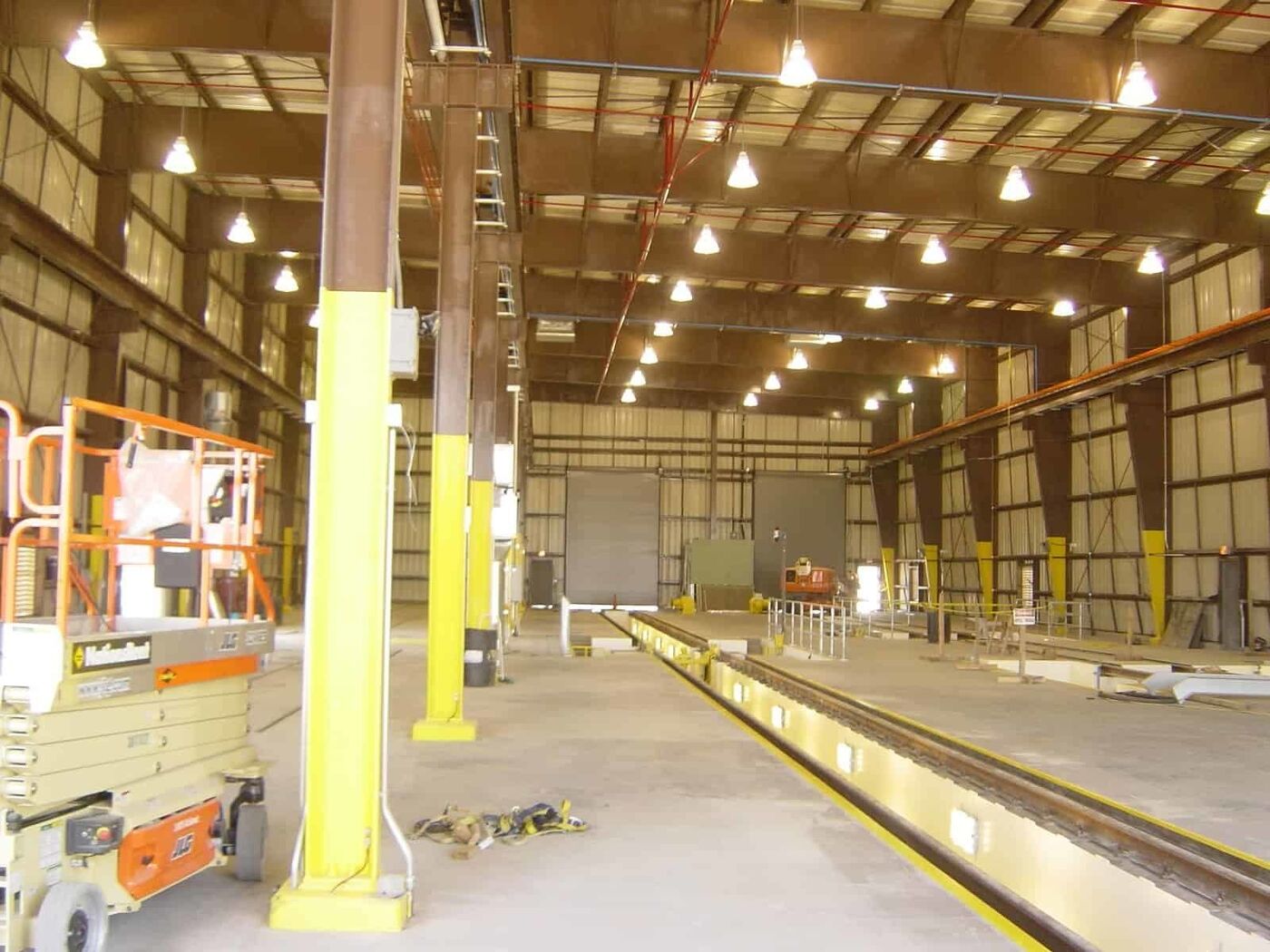
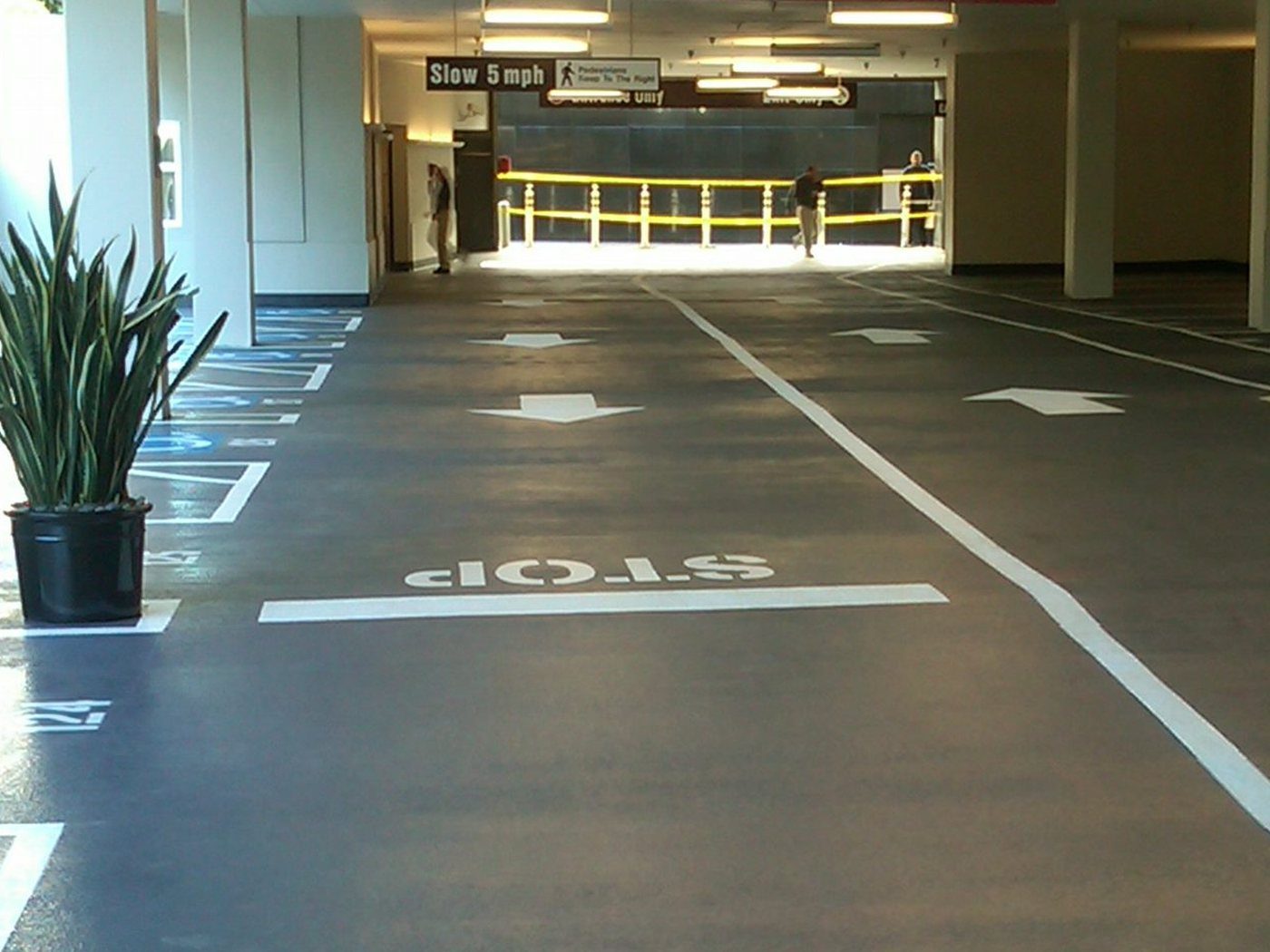

Concrete deck and floor coatings
More concrete deck and floor coatings
- Epoxy and fast cure floor coatings Hard, seamless epoxy floors, with fast-dry systems for tight schedules.
- Elastomeric floor coatings Elastomeric waterproofing for decks, balconies, walkways, and parking decks.
- Chemical resistant floor coatings For acids, oils, and solvents in food plants, labs, and mechanical rooms.
- Color coding, safety striping and directional markings Safety lines, aisle markings, and color-coded zones.
- Broadcast, anti-skid and traffic coatings Slip-resistant texture for wet floors, ramps, and parking decks.
- Polished and stained concrete Polished and stained concrete for lobbies, showrooms, and malls.
- Polyurethane and UV protective floor coatings Clear finishes and UV topcoats that keep floors and decks from fading.
- Industrial floor coatings Plant and warehouse floors, with a system matched to each area.
What is ESD flooring?
A floor that controls electrostatic discharge. It’s tied to ground. Static drains off people and carts before it can jump to sensitive electronics. Ours are epoxy coating systems with a grounding component under them.
Anti-static or ESD: what’s the difference?
The terms get used loosely. Anti-static usually means the floor doesn’t build up much charge. An ESD floor goes further. It carries the charge to ground at a conductive or static dissipative rate. If your equipment or quality program has a spec, tell us. We’ll match the system to it.
Do you test the floor after it’s installed?
We check that the floor is continuous and grounded before we hand it over. If you have test requirements, tell us up front. We’ll plan for them.
Can you install ESD flooring while we’re operating?
Yes. We work nights, weekends, and between shifts, and we do the floor in sections so equipment can move out of one area while we work in it.