

Concrete deck and floor coatings
Epoxy and fast-dry epoxy floor coatings
Hard, seamless epoxy floors for warehouses, plants, kitchens, and service bays, with fast-dry systems when the floor can’t be down for long.
Overview
Commercial epoxy flooring, done right
Epoxy is the workhorse of commercial floor coatings. It’s a two-part resin that cures into a hard, thick layer, grips the concrete tightly, and holds up to forklifts, spills, and daily cleaning. A commercial epoxy floor coating is also seamless and non-porous. Dirt and spills stay on top, where they wipe right up.
Standard or fast-dry epoxy
Both are durable, effective coatings. Standard epoxy takes longer to set, but it offers more options for chemical resistance and temperature resistance. Fast-dry (also called fast cure) epoxy sets sooner, so the floor goes back into use sooner, and it’s often the pick for cold buildings because it’s made to cure faster in cool weather. We use it where production can’t stop for long, and we coat in sections so part of the floor stays open.
Prep decides how long it lasts
Epoxy only works if it’s mixed right and applied to a clean, sound slab. Old coatings come off, the concrete is opened up by shot blasting or diamond grinding, and cracks are filled before the first coat goes down. Skip a step and it peels. At Accumachine, a floor put down by another contractor failed within six months. We removed it, prepped the slab, and applied several coats of epoxy with a polyurethane topcoat.
When epoxy isn’t the answer
Epoxy is rigid, and in direct sun it can yellow. Outdoor decks that move with the weather usually do better with an elastomeric system, and floors that get sunlight get a urethane topcoat over the epoxy. If epoxy isn’t right for your floor, we’ll tell you what is.
Projects
Epoxy floor projects
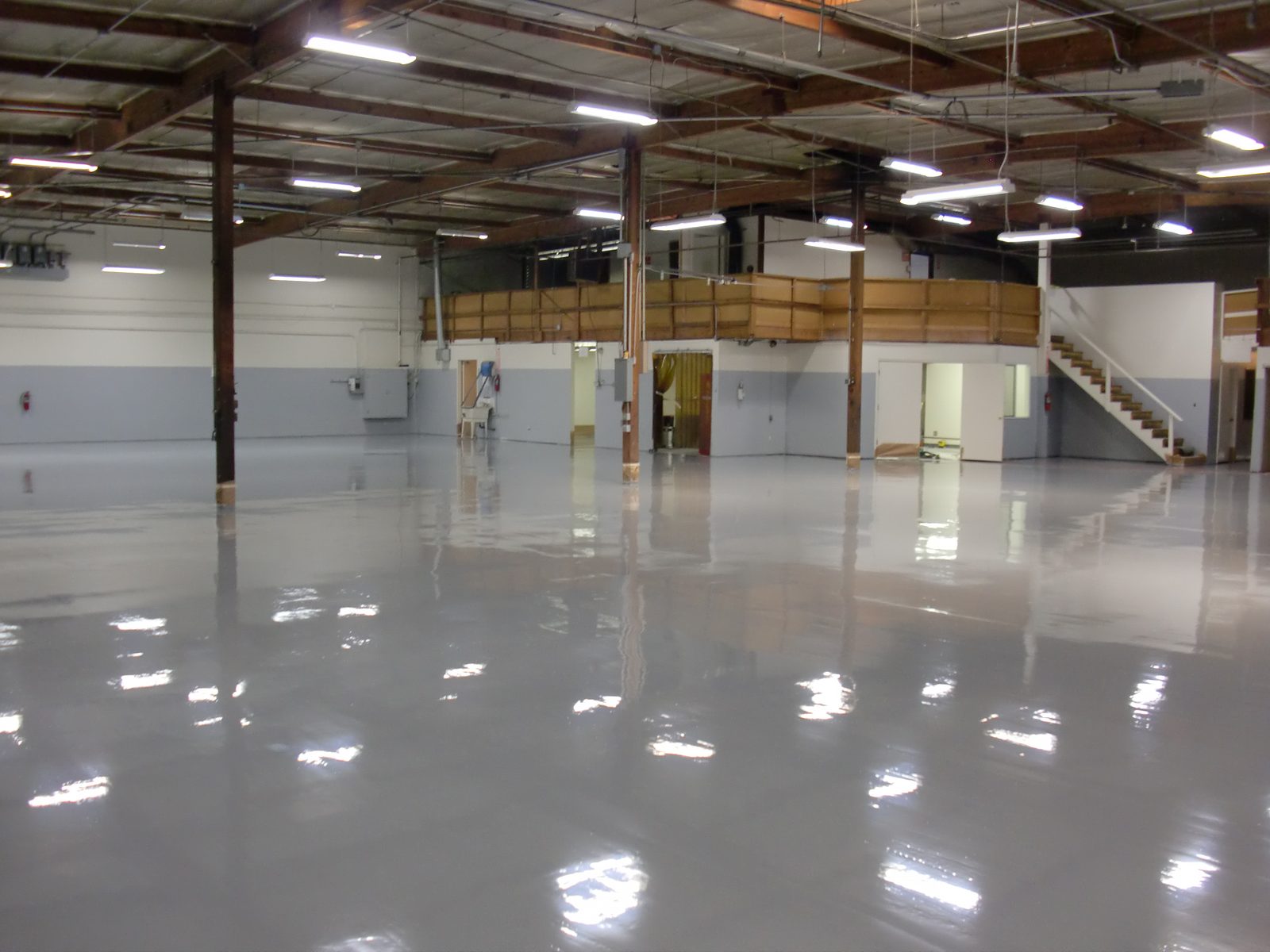 Epoxy floor coatingAccumachineFixing an epoxy floor coating failure
 Epoxy floor coatingCardinal Health CareCardinal Health called us in need of updating the look and functionality of 6,500 sq.
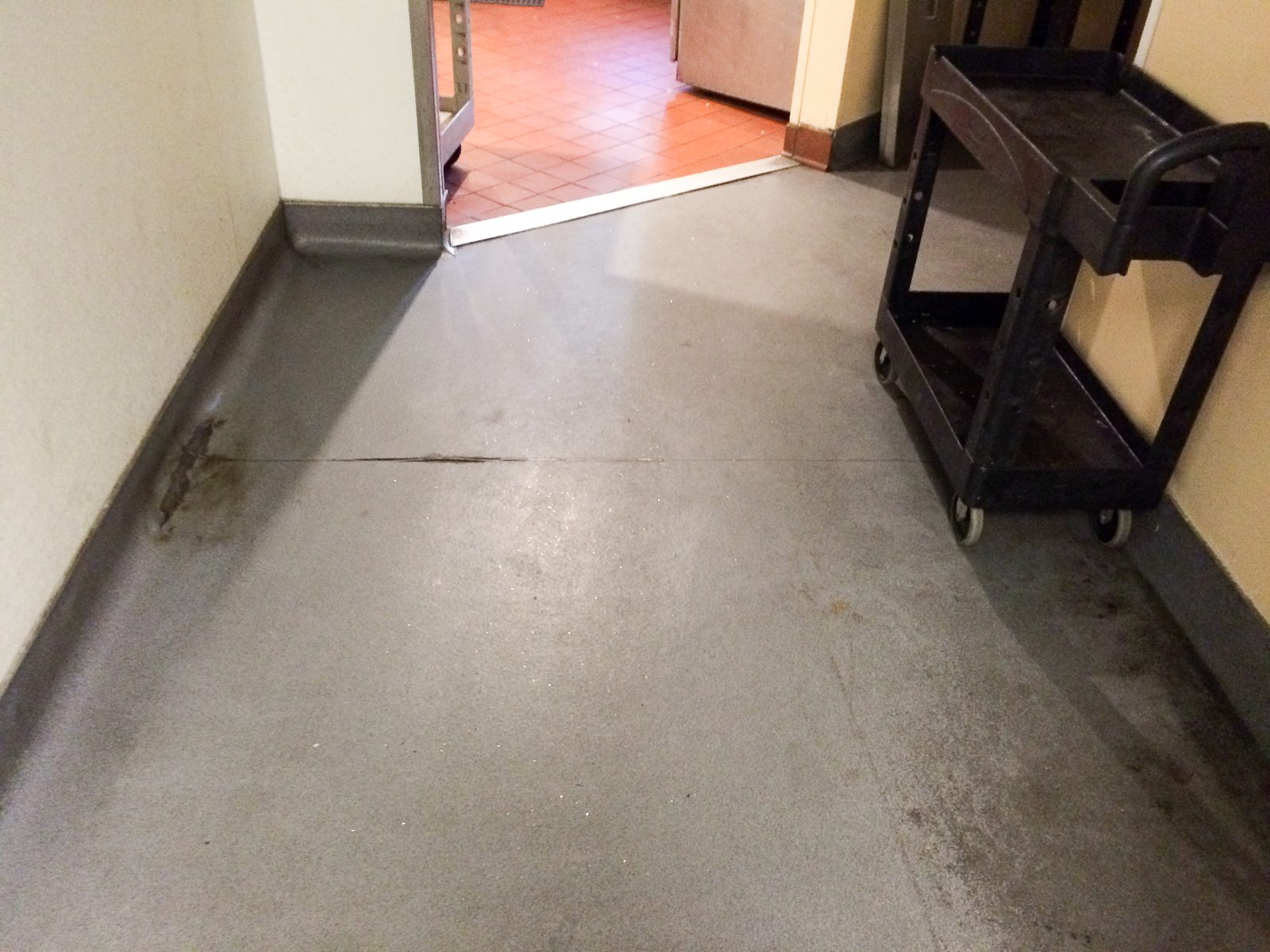 Epoxy floor coatingLaguna Cliffs Marriott Resort & SpaThis established client hired Raider to refurbish one of the hotel’s kitchen floors.
Concrete deck and floor coatings
More concrete deck and floor coatings
- Elastomeric floor coatings Elastomeric waterproofing for decks, balconies, walkways, and parking decks.
- Chemical resistant floor coatings For acids, oils, and solvents in food plants, labs, and mechanical rooms.
- Color coding, safety striping and directional markings Safety lines, aisle markings, and color-coded zones.
- Broadcast, anti-skid and traffic coatings Slip-resistant texture for wet floors, ramps, and parking decks.
- Anti-static and ESD floor coatings Controls static discharge around sensitive equipment.
- Polished and stained concrete Polished and stained concrete for lobbies, showrooms, and malls.
- Polyurethane and UV protective floor coatings Clear finishes and UV topcoats that keep floors and decks from fading.
- Industrial floor coatings Plant and warehouse floors, with a system matched to each area.
How long does fast-dry epoxy take to cure?
Less time than standard epoxy, but the exact time depends on the product, the number of coats, and the temperature in the building. We give you walk-on and drive-on times for your floor in the estimate, and we phase the work so part of the floor stays open.
How do you clean an epoxy floor?
Sweep or dust mop every day and clean with warm water. Skip soap-based cleaners, which discolor the surface over time, and abrasive pads, which scratch it and take away the shine. A microfiber mop dries it without streaks.
Can you fix an epoxy floor that’s peeling?
Yes. Most failures come from poor prep or the wrong system. We remove the failing coating, prep the slab properly, and put down a system that fits how the floor is used. That’s what we did at Accumachine after their floor failed in six months.
Do you coat home garage floors?
No. We only do commercial and industrial work. Commercial garages, service bays, and shop floors, yes.