

Structural steel, machinery and epoxy coatings
Chemical resistant coatings
Chemical resistant coatings for tanks, structural steel, and process equipment that see acids, solvents, fuels, oils, and washdowns. Epoxy does most of the work, and we know where it needs help.
Overview
Coatings that stand up to chemicals
Process chemicals, fuels, oils, and cleaning agents eat through ordinary paint and go to work on the metal underneath. In a plant, that means corroded tanks, pitted equipment housings, and steel that needs replacing years early. Chemical resistant coatings put a dense, hard film between the chemical and the metal. The right one depends on the chemical, how long it stays on the surface, and how hot it gets.
Epoxy coatings for steel and equipment
Epoxy is the workhorse. It’s two parts, a resin and a hardener, that react and cure into a hard, dense film. Cured epoxy resists corrosive fluids, abrasion, impact, compressive forces, turbulence, and cavitation, which is why it goes on tanks, pumps, piping, and steel that sits in water or chemicals. Cured epoxy is also non-toxic, and food-grade epoxy systems are used on machinery in food plants.
Epoxy is also unforgiving to apply. The two parts have to be measured to the right ratio and mixed thoroughly. Too much resin and it won’t harden. Too much hardener and it overheats and won’t cure properly. Temperature and timing matter too. Our crews mix on site and apply to the spec.
When epoxy needs help
Some exposures call for more. Polyurea and ceramic coatings handle extreme chemical exposure and heavy impact. Outdoors, epoxy chalks and yellows in the sun, so it gets a polyurethane topcoat. Hot surfaces need a high temperature system.
Tanks, steel, and process equipment
We coat tank exteriors, the steel around them, and the equipment in the process: pumps, piping, machinery housings, chillers, and vessels. At a DuPont Fabros data center, eight chiller water boxes were blasted to SSPC SP-10 inside full containment, then coated with Enecon paste, a base coat, and a final coat. At Virtus Nutrition, we coated tank exteriors, interior piping, and structural steel with epoxy, polyurethane, and direct-to-metal systems. Tank interiors have their own page, and so do floors: see chemical resistant floor coatings.
Projects
Chemical resistant and epoxy projects
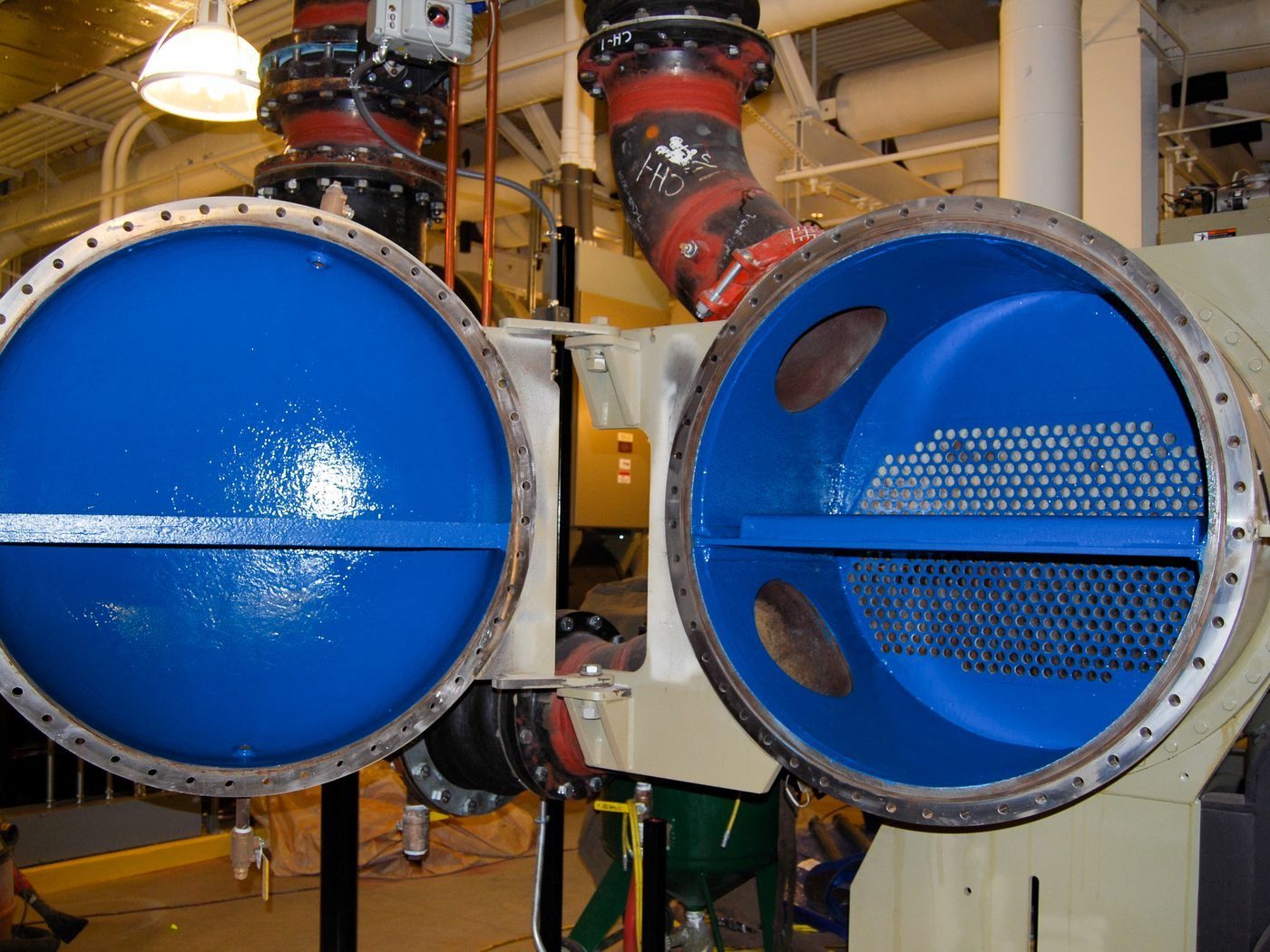 Chiller water boxesDuPont FabrosChiller water boxes relined in a data center plant room.
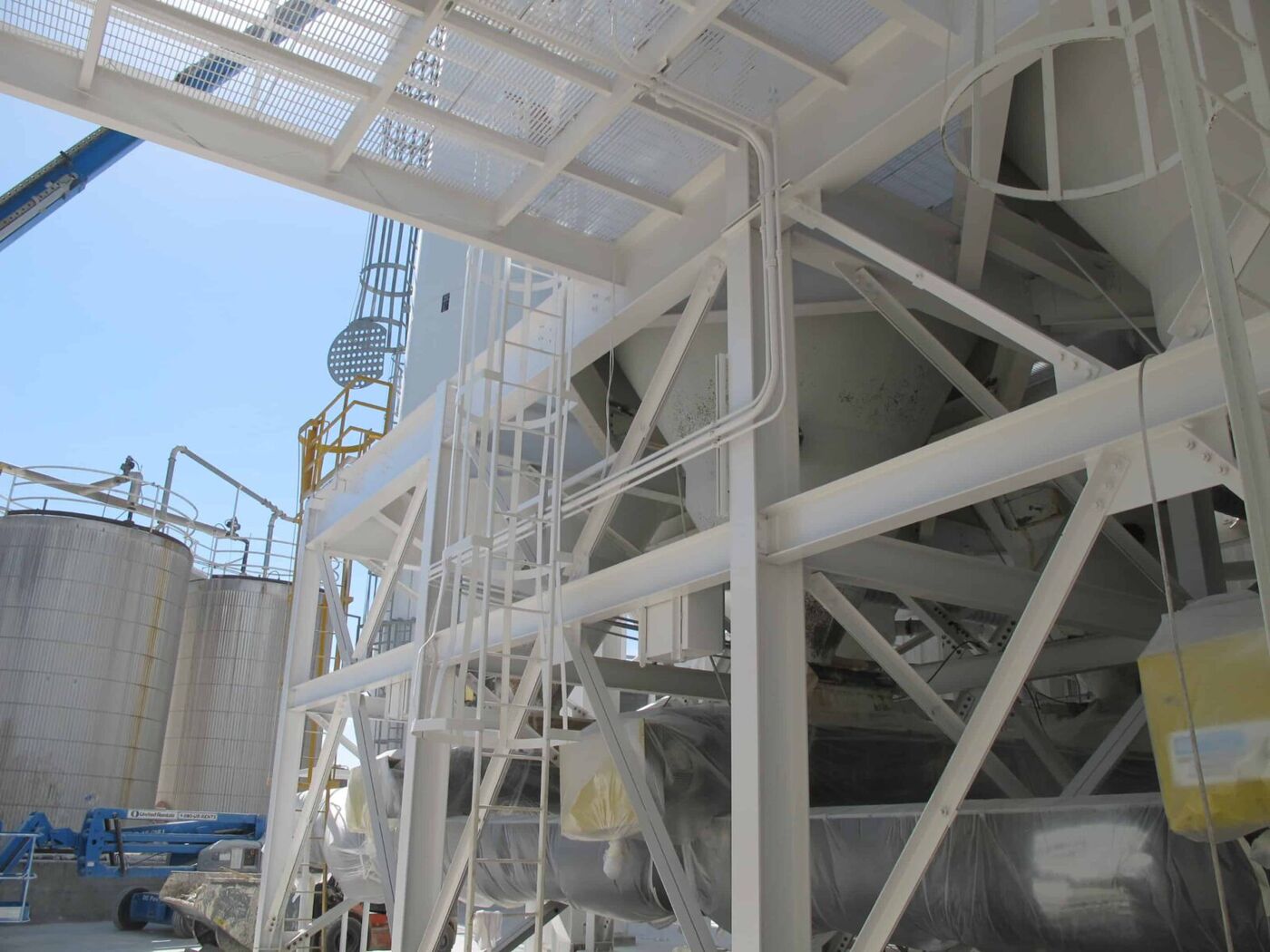 Structural steel coatingsVirtus NutritionStructural steel, hoppers and silos coated at a processing plant.
 Epoxy coatingsLong Beach Transit AuthorityThe Long Beach Transit authority needed to update their facilities.
Structural steel, machinery and epoxy coatings
More structural steel, machinery and epoxy coatings
- Machinery and equipment coatings Coatings for cranes, pumps, fans, and production equipment, applied in place.
- Corrosion control coatings Layered coating systems that keep rust off steel, tanks, and equipment.
- Structural steel coatings Beams, columns, towers, and support steel, prepped and coated to spec.
- High temperature coatings Heat-rated coatings for stacks, ovens, exhaust, and hot equipment.
- Polyurethane and UV protective coatings UV stable polyurethane topcoats for outdoor steel, tanks, and equipment.
- Pipe and conduit coatings Coatings for process piping, rooftop pipes, and pipe supports.
Is epoxy chemical resistant?
Yes. Epoxy is one of the most chemical resistant coatings for steel, and it’s the base of most chemical resistant systems. How resistant depends on the formulation and the chemical. For harsher chemicals or heavy impact, polyurea and ceramic coatings go further.
What is an epoxy coating?
A two-part coating, resin and hardener, that cures by chemical reaction into a hard, durable film. On steel and equipment it resists corrosion, chemicals, abrasion, and impact. It doesn’t hold up to sun on its own, so outdoor epoxy usually gets a polyurethane topcoat.
Do you coat floors that see chemicals too?
Yes. Chemical resistant floors for plants, labs, and mechanical rooms have their own page: chemical resistant floor coatings.
Can you line the inside of a tank?
Yes. Interior tank linings are their own specialty, matched to what the tank holds. See tank lining and coatings.