

Structural steel, machinery and epoxy coatings
Machinery and equipment coatings
Industrial equipment painting for cranes, presses, pumps, fans, chillers, and the rest of the machinery that keeps your plant running. Most of it we coat right where it sits.
Overview
Coatings that keep equipment running
Machinery takes a beating a wall never sees. Oil, fuel, solvents, and process chemicals land on it. Moving parts rub, vibrate, and get hit. Heat, sun, and moisture work on the finish from the outside. Once the coating goes, rust and wear follow, and that means more repairs and more downtime. A coating system matched to how the machine runs slows all of that down.
What we coat
Conveyors, presses, mixers, and pumps on the production floor. Gantry cranes, exhaust fans, air handlers, chillers, and generators. Mining and earthmoving equipment that lives in dust and impact. Loading equipment and forklifts at distribution centers. Military vehicles and support equipment.
How an equipment job runs
First the surface. Rust, oil, scale, and old coating come off by solvent cleaning, power tools, or abrasive blasting, to the SSPC or NACE standard in the spec. Where blasting is needed, we coordinate it and oversee it as part of the job. Then a primer for grip and rust resistance, and the system the exposure calls for: epoxy, polyurethane, zinc-rich, or ceramic. We watch film thickness, surface temperature, and cure time as we go, and we check adhesion, dry film thickness, and cure before the equipment goes back into service.
Working around the machine
Most equipment can’t leave the floor, so the work comes to it. Namasco, a steel fabrication plant, called us on a Thursday about a gantry crane. A crew was there the next day, and both of the plant’s cranes were coated in epoxy by Monday. In a working data center, we set up full containment with air filtration and recoated eight chiller water boxes for DuPont Fabros. At a new NOAA research facility near the ocean, we recoated a rusting exhaust fan in place, kept the blades in balance, and finished ahead of a tight opening date.
Projects
Machinery and equipment projects
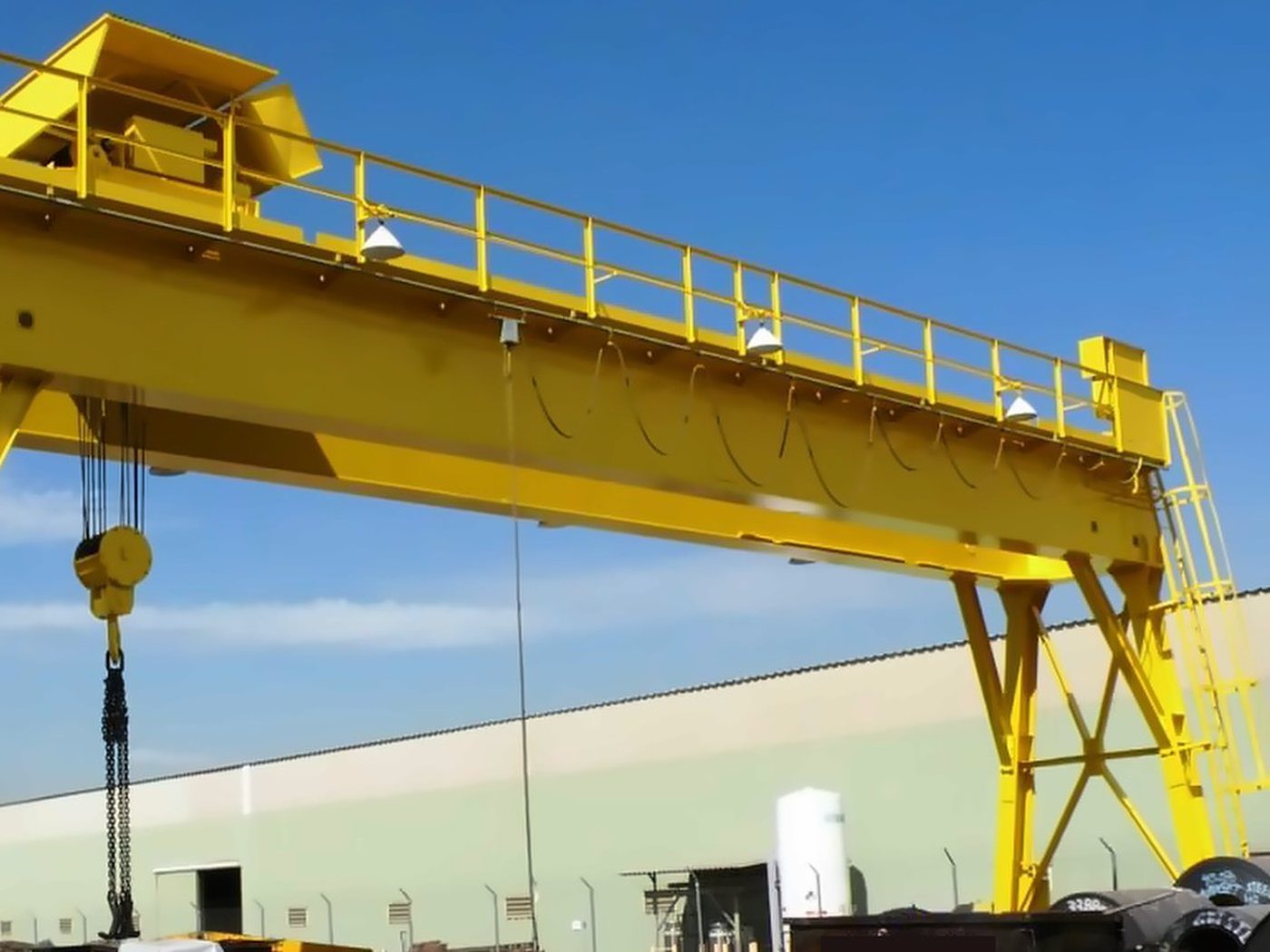 Epoxy crane coatingNamasco / Kloeckner MetalsGantry crane blasted and coated in epoxy.
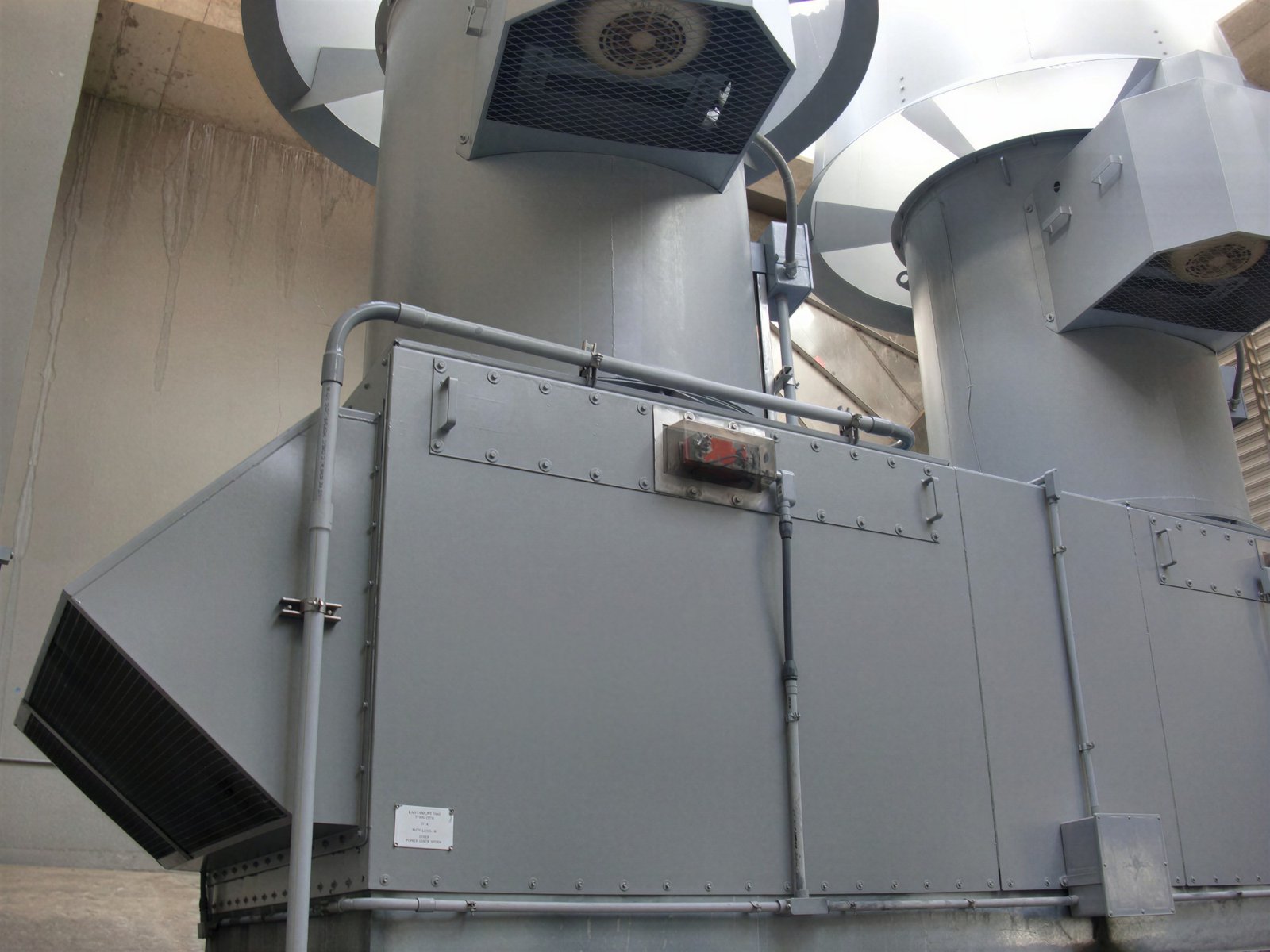 Machinery coatingsNational Oceanic & Atmospheric AdministrationWe were contacted by an HVAC Fan manufacturer Toro-Aire with a big problem.
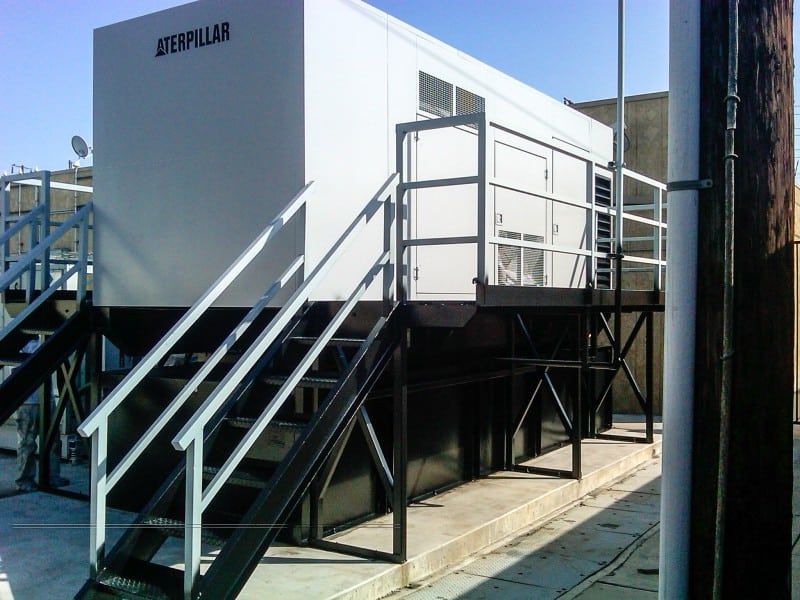 Machinery coatingsVerizon CaliforniaWe worked on the switching facilities for Verizon Wireless in various locations…
Structural steel, machinery and epoxy coatings
More structural steel, machinery and epoxy coatings
- Corrosion control coatings Layered coating systems that keep rust off steel, tanks, and equipment.
- Structural steel coatings Beams, columns, towers, and support steel, prepped and coated to spec.
- High temperature coatings Heat-rated coatings for stacks, ovens, exhaust, and hot equipment.
- Chemical resistant coatings Epoxy and specialty coatings for tanks, steel, and process equipment that see chemicals.
- Polyurethane and UV protective coatings UV stable polyurethane topcoats for outdoor steel, tanks, and equipment.
- Pipe and conduit coatings Coatings for process piping, rooftop pipes, and pipe supports.
What coating is best for industrial equipment?
It depends on what the machine goes through. Epoxy for abrasion, impact, and chemicals. A polyurethane topcoat where it sits in the sun. A zinc-rich primer where rust is the main threat. A high temperature system for parts that run hot. We pick the system after we see the equipment and how it runs.
How long will our equipment be out of service?
As short as we can make it. We work during shutdowns, between shifts, on nights, and on weekends, and we coat one machine or section at a time. Namasco’s two gantry cranes were done four days after the first call.
Can you fix a coating that failed on new equipment?
Yes. We’ve fixed many paint and coating failures over the years. At NOAA, the coating on a new exhaust fan had failed before the building opened, and rust was getting into the air. We recoated it in place with three coats of a direct-to-metal system and finished ahead of schedule.
Do you work around sensitive equipment, like in data centers?
Yes. At DuPont Fabros we worked inside full containment with air filtration in a live data center. At Verizon’s switching facilities in California, every job takes extra care and prep to protect the equipment around the work.