

Tank lining and coatings
Exterior tank coatings
Storage tank exterior painting that keeps rust, sun, and weather off your tanks. Prepped right and coated with the system your site calls for.
Overview
Tanks live outside
A storage tank stands out in the weather all year. Rain, salt air, sun, wind, and temperature swings work on the steel every day, and once the coating goes, rust follows. Left long enough, corrosion weakens the walls and the supports. A good exterior tank coating keeps the steel sound and the tank in service longer.
Why tanks get repainted
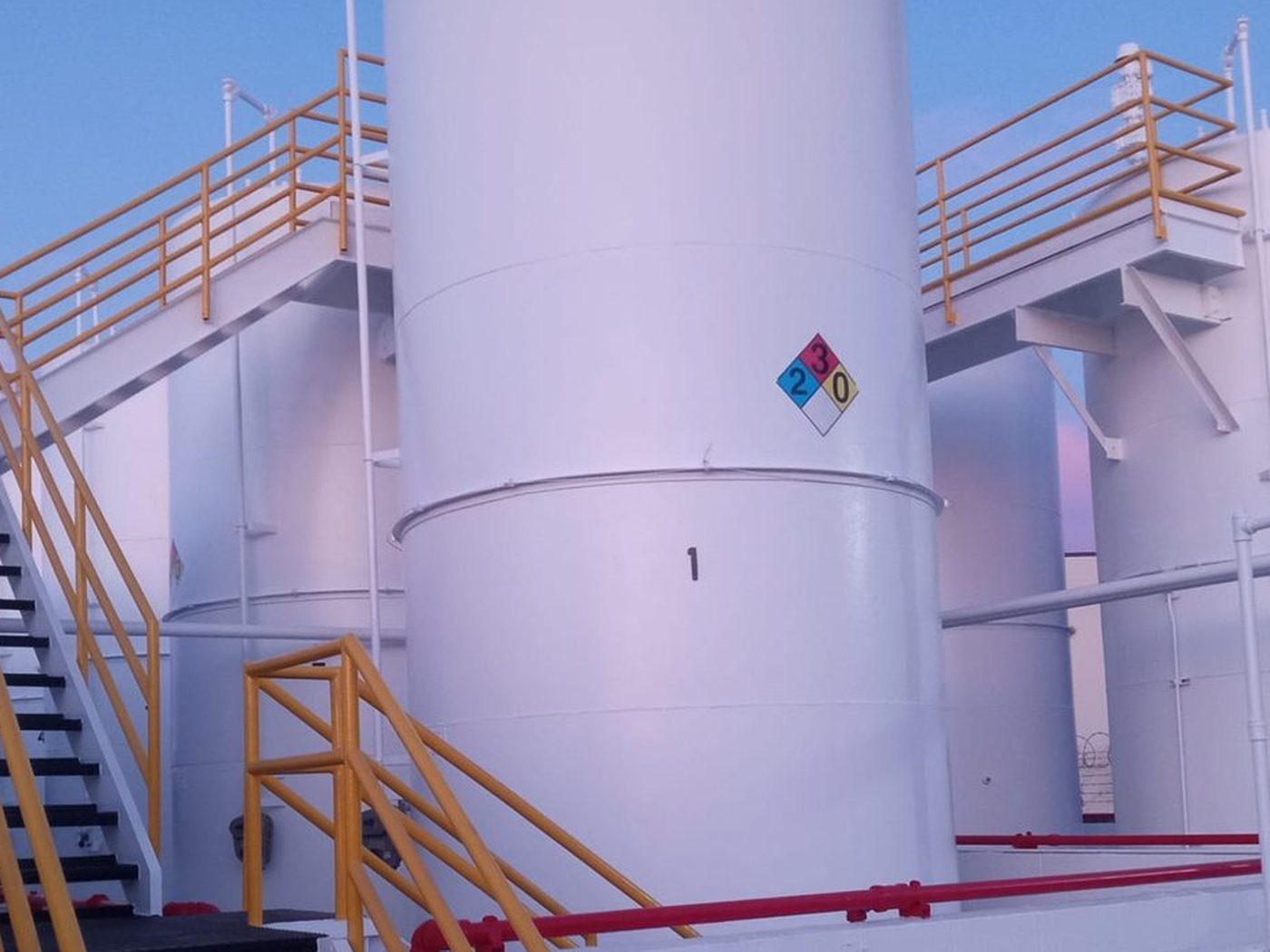
Most exterior tank work is a recoat. The old coating has chalked, peeled, or rusted through. Other times it’s a new color scheme for the facility, or liquid level markings and labels that need to be readable again. The REMET Alcohols silo tanks had old coating peeling off in large patches. They now have a new white coating with the hazard labels back in place.
Exterior tank coating systems
Epoxy is the workhorse. It’s a two-part coating that forms a tough, corrosion-resistant film, grips the steel, and holds up to heat and chemicals, but it needs exact mixing and timing to perform. Outdoors, a UV-protective polyurethane topcoat goes over it, because the topcoat is what protects the epoxy from the sun. Rust-inhibiting primers, direct-to-metal (DTM) coatings, elastomerics, and acrylics fit other tanks and budgets.
Prep decides how long it lasts
A coating is only as good as its grip. Loose coating and rust come off first, with hand and power tool cleaning on sound areas and blasting where the steel has rusted. New tanks need prep too, since a smooth surface has to be roughened to give the coating a profile to bond to. Where blasting is needed, we coordinate the blasting work and oversee it as part of the job.
A few tank exteriors we’ve coated
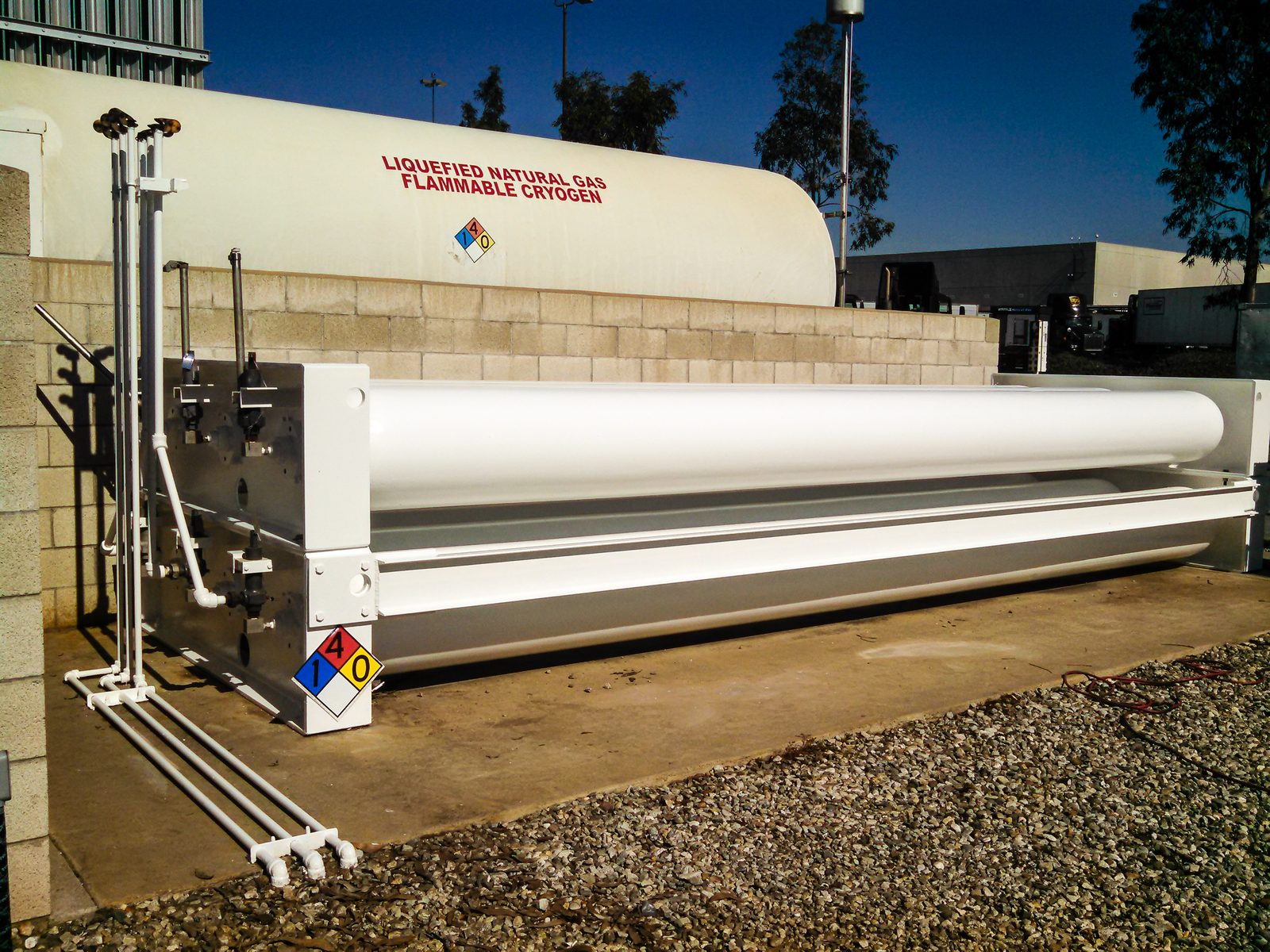
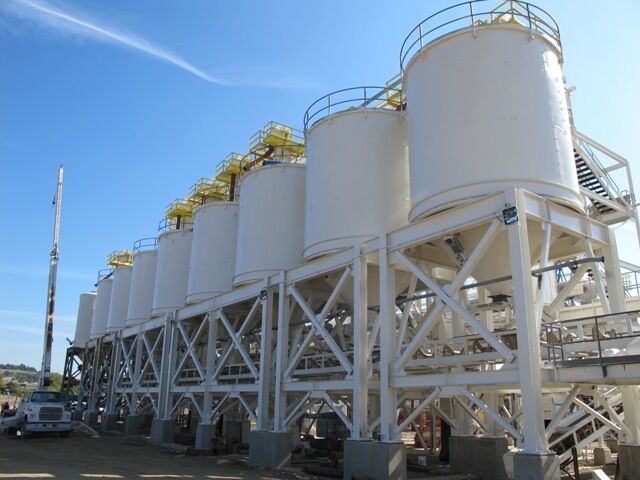
At UPS, the CNG tank clusters were hand and power tool cleaned, then coated with an epoxy primer and a urethane finish. At Sierra Silica Resources, we coated ten 30,000-gallon tanks and silos with a rust-inhibiting DTM primer and a DTM topcoat.
Projects
Exterior tank projects
Tank lining and coatings
More tank lining and coatings
- Containment and secondary containment tank coatings Linings for containment tanks and the spill areas around them.
- Tank farm coatings and maintenance Coating programs for many tanks across large or remote sites.
- Water tank coatings Linings and exterior coatings for water storage tanks.
- Confined space coatings Tank interiors, vaults, and water boxes, coated by trained crews.
What’s the best paint for the outside of a storage tank?
There isn’t one best paint. For steel tanks outdoors, epoxy with a polyurethane topcoat is the usual choice: the epoxy protects against corrosion and chemicals, and the polyurethane handles the sun. DTM coatings combine primer and finish for faster jobs, and elastomeric or acrylic coatings fit some tanks. We pick the system from the tank, what it holds, and where it sits.
Do you have to blast the whole tank?
Not always. Sound areas can often be cleaned with hand and power tools, as on the UPS CNG tanks. Rusted or failing areas get blasted. We coordinate the blasting work and oversee it as part of the job.
How often does a tank exterior need recoating?
It depends on the coating system, the climate, and what’s around the tank. Coastal sites, chemical plants, and hot, sunny yards need attention sooner. A maintenance program with regular inspections catches the spots that go first, so you’re touching up instead of repainting the whole tank.